


Process Coordination
Cutting, machining, strengthening, printing and coating are sequenced around the finished part rather than handled as unrelated operations.

Multiple glass processes, one manufacturing route.
From material selection to finished component.
Cutting, machining, strengthening, printing and coating are sequenced around the finished part rather than handled as unrelated operations.

Choose soda-lime, low-iron, aluminosilicate, Gorilla® Glass, borosilicate or another substrate around the application.

Critical dimensions, surface requirements and process-specific checks remain tied to the drawing and finished component.

CNC machining, drilling, slots, notches and finished edgework support drawing-driven custom parts.

Strengthening, printing and compatible surface treatments can follow geometry-defining operations in the correct sequence.

Projects can move beyond cut blanks to assembly-ready cover glass, optical parts and fabricated technical glass.

Defined materials, programmed geometry and controlled downstream processes support repeat orders and volume increases.
The same process sequence can be retained from repeat batch to repeat batch when the specification remains unchanged.
Dimensional and surface checks can be placed after the manufacturing stages that matter most to the part.
Machining, strengthening, printing and coating can remain under one project definition instead of separate purchasing steps.
Material format, artwork, tooling and packaging requirements can be established before recurring production.
Drawing, glass condition, cosmetic criteria and surface treatment stay linked to the finished-part requirement.

Start with geometry, glass material, thickness, tolerances and the operating environment.

Review hole geometry, edge distance, process order and strengthening compatibility before production.
Use cutting, CNC, drilling, slicing and edge finishing to establish the physical component.
Strengthening, optical coatings and printed features can be added to evaluate the complete component configuration.
A successful prototype can define the same geometry and process sequence used for later production.
The process route is selected around the component requirement instead of forcing every design into one glass process.
Geometry, strengthening, printing and coatings affect one another. Defining the process sequence early helps keep the finished glass component manufacturable.
Custom Cover GlassStrengthened, machined and printed glass for HMI, touch and display interfaces.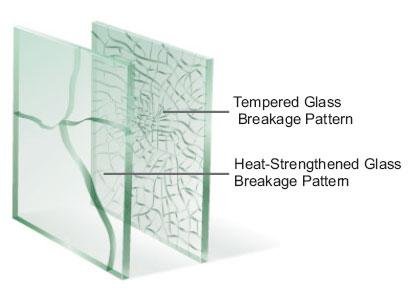 Heat-Treated GlassTempered and heat-strengthened panels for industrial, appliance and equipment applications.
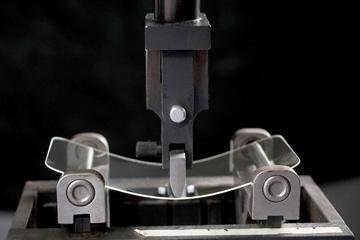 Chemically Strengthened GlassIon-exchange strengthening for thin cover glass and high-cosmetic components.
 CNC Glass ComponentsCustom holes, slots, grooves, notches and external profiles for drawing-driven parts.
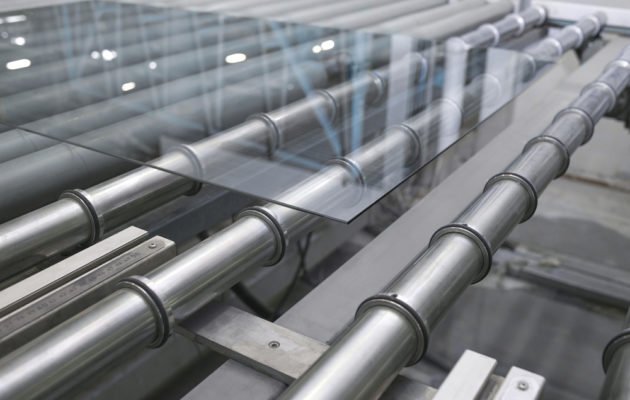 Printed & Functional GlassScreen printing, conductive features and permanent graphical layers on fabricated glass.Optical Filter ComponentsBandpass, UV-control, mirror and surface coatings integrated with finished optical parts.

Confirm material, thickness, geometry, tolerances and the required surface or optical functions.
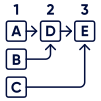
Coordinate geometry, strengthening, printing and coating in the correct manufacturing sequence.

Check the finished component against the defined dimensional, cosmetic and functional requirements.
 Process planning
Define the manufacturing sequence around the finished part and processes that lock geometry.
 Precision fabrication
Cut, slice, drill, machine and finish the part geometry before downstream treatment.
 Strengthening
Apply thermal or chemical strengthening where required by material and thickness.
 Surface finishing
Add screen printing, AR/AG/AF, conductive or optical coatings when compatible.
 Final inspection
Verify drawing-critical dimensions, surfaces and specified functional features before packing.

Custom HMI, equipment windows, instrument glass and fabricated technical components.

Cover glass, sensor windows, conductive surfaces and thin precision substrates.

Vehicle displays, HUD covers, sensor protection and transportation interfaces.

Optical filters, reflective coatings, windows and coated precision glass.

Display covers, optical windows, antimicrobial surfaces and laboratory glass components.

Lighting covers, optical-control glass, photovoltaic covers and heat-resistant components.
CNC geometry, strengthening, anti-glare treatment and printed borders combined into one cover-glass configuration.
View capability →Thin strengthened glass with precision geometry and compatible optical or easy-clean surface treatment.
View capability →Fabricated, drilled and heat-treated glass for equipment glazing and exposed industrial components.
View capability →Send the glass material, dimensions, drawing, quantity and required finishing processes.
Tell us what the glass component must do, how it is specified and which manufacturing stages are required.
Contact Us